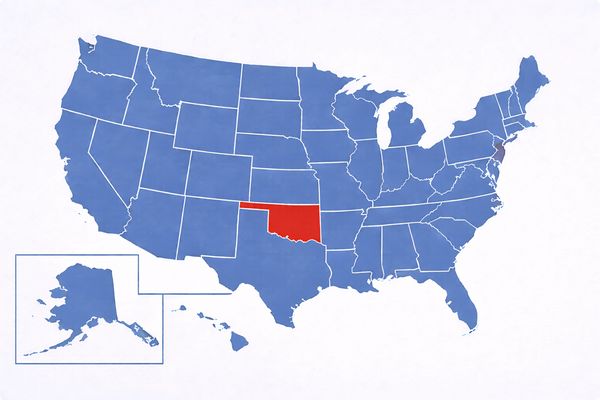
Oklahoma Overview
State Name: Oklahoma
Abbreviation: OK
Capital: Oklahoma City
Largest City: Oklahoma City
Statehood Date: November 16, 1907 (46th state)
Time Zone: Central Time
Nicknames: The Sooner State
Motto: Labor omnia vincit (Labor conquers all things)
Location & Geography of Oklahoma
Oklahoma is located in the South-Central region of the United States. It borders Kansas to the north, Missouri to the northeast, Arkansas to the east, Texas to the south and west, New Mexico to the west, and Colorado to the northwest.
The state has diverse geography including prairies, plains, forests, hills, and small mountain ranges. Oklahoma is known for its wide open landscapes, lakes, and regions of farmland and ranch country.
Oklahoma experiences a mix of climates and is known for seasonal thunderstorms and tornado activity, as it lies within “Tornado Alley.”
Major Cities & Regions of Oklahoma
Oklahoma City: The capital and largest city, known for business growth, culture, and regional travel.
Tulsa: Known for arts, music culture, and a strong energy-related economy.
Norman: A college town home to the University of Oklahoma.
Broken Arrow: A fast-growing suburban city near Tulsa.
Lawton: Known for military presence and outdoor travel near mountains.
Economy & Key Industries in Oklahoma
Oklahoma’s economy is supported by energy production, agriculture, aviation, manufacturing, transportation, and healthcare.
The state is one of the nation’s leading producers of oil and natural gas, making energy a major part of its economy.
Agriculture includes cattle ranching, wheat farming, and poultry production across rural areas.
Oklahoma also has growing industries in aerospace, technology, and business services.
Government & Administration of Oklahoma
Oklahoma has an elected Governor and a bicameral legislature consisting of the Oklahoma House of Representatives and Oklahoma Senate.
The state is divided into 77 counties, each providing local services and administration.
Education in Oklahoma
Oklahoma has major universities such as the University of Oklahoma, Oklahoma State University, and the University of Tulsa.
The state supports higher education and research programs in engineering, agriculture, healthcare, and business.
Transportation & Connectivity in Oklahoma
Major highways include I-35, I-40, and I-44, connecting Oklahoma to major travel and trade routes across the region.
Will Rogers World Airport (Oklahoma City) and Tulsa International Airport are the main airports for passenger travel.
Oklahoma also has strong freight networks and rail connections supporting agriculture and energy industries.
Tourism & Attractions in Oklahoma
Oklahoma City National Memorial: A major historical and memorial site.
Tulsa River Parks: Popular for walking, outdoor recreation, and scenic views.
Route 66: Oklahoma is a major part of the historic Route 66 travel route.
Wichita Mountains Wildlife Refuge: Known for hiking, wildlife, and nature travel.
Turner Falls Park: A popular outdoor destination featuring waterfalls and natural beauty.
Best Time to Visit
The best time to visit Oklahoma is during spring (March to May) and fall (September to October) when the weather is mild and comfortable for travel.
Spring is also the season for wildflowers and outdoor festivals, though it is also peak time for thunderstorms.
Summer can be hot, while winter is usually mild to cool with occasional cold spells.
Culture & Lifestyle in Oklahoma
Oklahoma has a strong mix of Southern, Western, and Native American culture.
The state is home to many Native American nations, shaping its traditions, heritage, and cultural events.
Local lifestyle includes ranching traditions, outdoor recreation, and community festivals.
Food culture includes barbecue, steaks, and classic comfort dishes, along with Native American and southwestern influences.
History & Important Facts of Oklahoma
Oklahoma became the 46th state in 1907 and has a history closely linked to Native American relocation, frontier settlement, and oil development.
The state is known for historic events such as the Land Run, which shaped early settlement patterns.
Oklahoma also has important civil rights and cultural history, including major Native American heritage sites.
Cost of Living & Living Conditions in Oklahoma
Oklahoma has a low cost of living compared to many US states, making it attractive for affordable housing and family living.
Major cities like Oklahoma City and Tulsa have growing job markets while remaining affordable.
Job opportunities are strong in energy, manufacturing, healthcare, aviation, agriculture, and logistics.
Unique Highlights / Fun Facts about Oklahoma
1) Oklahoma is known as the “Sooner State” connected to early settlers in the Land Run era.
2) The state is part of Tornado Alley and is well known for weather research.
3) Oklahoma has a major place in Route 66 history.
4) The state has one of the largest Native American populations in the US.
5) Oklahoma has many lakes and outdoor destinations for boating and fishing.
Summary of Oklahoma
Oklahoma is a culturally rich South-Central state known for energy production, Native American heritage, and open prairie landscapes. With cities like Oklahoma City and Tulsa, historic Route 66 attractions, and scenic wildlife refuges, Oklahoma offers an affordable lifestyle and unique travel experiences.