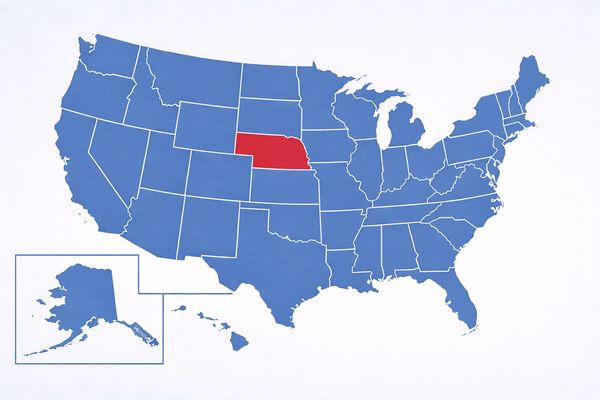
Nebraska Overview
State Name: Nebraska
Abbreviation: NE
Capital: Lincoln
Largest City: Omaha
Statehood Date: March 1, 1867 (37th state)
Time Zone: Central Time (most of the state), Mountain Time (western Nebraska)
Nicknames: The Cornhusker State
Motto: Equality before the law
Location & Geography of Nebraska
Nebraska is located in the Great Plains region of the central United States. It borders South Dakota to the north, Iowa to the east, Missouri to the southeast, Kansas to the south, Colorado to the southwest, and Wyoming to the west.
The state is known for wide open plains, farmland, rolling hills, river valleys, and the unique Sandhills region, which is one of the largest grass-stabilized sand dune areas in the world.
Nebraska has a continental climate with hot summers, cold winters, and strong seasonal weather changes, including thunderstorms and occasional tornado activity.
Major Cities & Regions of Nebraska
Omaha: The largest city, known for business, finance, and cultural attractions.
Lincoln: The capital city, known for education and government.
Bellevue: A growing city near Omaha, known for suburban living and military presence.
Grand Island: A regional city known for agriculture and local industry.
Kearney: Known for central Nebraska travel, education, and community life.
Economy & Key Industries in Nebraska
Nebraska’s economy is strongly driven by agriculture, food processing, manufacturing, transportation, and energy.
The state is a leading producer of corn, beef, soybeans, and ethanol, making farming and ranching the foundation of its economy.
Nebraska is also known for strong business and financial services, especially in Omaha, along with growing healthcare and technology industries.
Transportation and logistics are important due to Nebraska’s central location and major highways crossing the state.
Government & Administration of Nebraska
Nebraska is unique because it has a single-house legislature (unicameral), unlike other US states that have two-house systems.
The state is divided into 93 counties, each providing local administration and services.
Education in Nebraska
Nebraska has major universities such as the University of Nebraska–Lincoln and the University of Nebraska at Omaha.
The state supports strong public education systems and higher education programs focused on agriculture, engineering, and business.
Community colleges and training programs are also important for workforce development.
Transportation & Connectivity in Nebraska
Major highways include I-80, which runs across the entire state and is one of the most important transportation routes in the United States.
Eppley Airfield (Omaha) is the main passenger airport, along with regional airports in other cities.
Nebraska has strong rail infrastructure and freight transport, supporting agriculture and manufacturing exports.
Tourism & Attractions in Nebraska
Henry Doorly Zoo and Aquarium (Omaha): One of the top zoos in the United States.
Chimney Rock: A famous historic landmark from the Oregon Trail era.
Scotts Bluff National Monument: Known for scenic views and pioneer history.
Sandhills: A unique natural region with open landscapes and peaceful travel.
Carhenge: A quirky roadside attraction built from old cars arranged like Stonehenge.
Best Time to Visit
The best time to visit Nebraska is during late spring (May to June) and early fall (September to October) when the weather is mild and comfortable for travel.
Summer is a popular time for festivals and outdoor activities but can be hot in open prairie areas.
Winter can be cold and snowy, but Nebraska still offers museums, indoor attractions, and seasonal events.
Culture & Lifestyle in Nebraska
Nebraska is known for friendly communities, farming traditions, and Midwestern values.
The state has a strong sports culture, especially college football with the Nebraska Cornhuskers.
Local food and lifestyle are influenced by agriculture, with many community events centered on fairs and festivals.
History & Important Facts of Nebraska
Nebraska became the 37th state in 1867 and played an important role in westward expansion and pioneer travel routes.
The state was part of major migration paths such as the Oregon Trail and was important for railroad development.
Nebraska is also known for its strong agricultural growth and ranching heritage.
Cost of Living & Living Conditions in Nebraska
Nebraska has a moderate to low cost of living compared to many US states, with affordable housing in many areas.
Omaha and Lincoln have higher costs than rural areas, but overall living expenses remain reasonable.
Job opportunities are strong in agriculture, manufacturing, healthcare, transportation, and finance.
Unique Highlights / Fun Facts about Nebraska
1) Nebraska has the only unicameral (single-house) state legislature in the United States.
2) The state is famous for corn production and beef farming.
3) Omaha’s zoo is considered one of the best in the world.
4) Chimney Rock is one of the most famous landmarks of the Oregon Trail era.
5) Nebraska’s Sandhills region is one of the largest prairie ecosystems in North America.
Summary of Nebraska
Nebraska is a central Great Plains state known for agriculture, friendly communities, and rich pioneer history. With attractions like Chimney Rock, Scotts Bluff, and one of America’s top zoos in Omaha, Nebraska offers a unique mix of open landscapes, cultural charm, and affordable living.