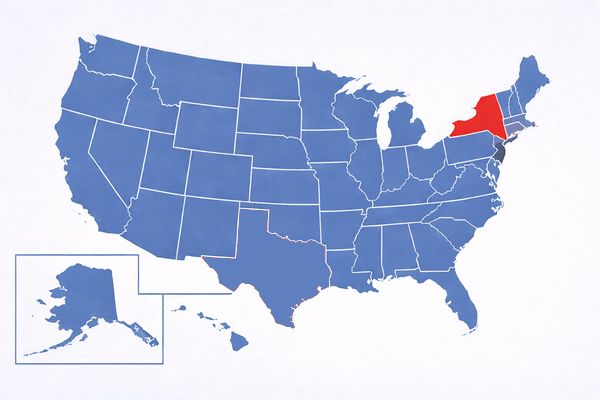
New York Overview
State Name: New York
Abbreviation: NY
Capital: Albany
Largest City: New York City
Statehood Date: July 26, 1788 (11th state)
Time Zone: Eastern Time
Nicknames: The Empire State
Motto: Excelsior (Ever upward)
Location & Geography of New York
New York is located in the Northeastern United States. It borders Vermont, Massachusetts, and Connecticut to the east, New Jersey and Pennsylvania to the south, and Canada to the north and northwest.
The state has highly diverse geography including Atlantic coastline, major rivers like the Hudson River, large mountain regions, forests, lakes, and famous waterfalls such as Niagara Falls.
Upstate New York includes scenic regions like the Adirondack Mountains and the Finger Lakes, while New York City and Long Island are major urban and coastal centers.
New York has a humid continental climate in most regions, with warm summers and cold winters, while coastal areas are more moderate.
Major Cities & Regions of New York
New York City: The largest city, known as a global center for finance, culture, media, and tourism.
Buffalo: Known for Niagara Falls access, industry, and sports culture.
Rochester: Known for education, technology history, and business.
Syracuse: Known for universities, snowfall winters, and regional culture.
Albany: The capital city, known for government and history.
Economy & Key Industries in New York
New York has one of the largest economies in the United States, driven by finance, technology, media, healthcare, education, tourism, and manufacturing.
New York City is a global financial capital, home to major institutions and the New York Stock Exchange.
Tourism is a major industry, with visitors coming for New York City landmarks, Broadway shows, and attractions like Niagara Falls.
Upstate regions support manufacturing, agriculture, and energy production, while major cities drive innovation and business services.
Government & Administration of New York
New York has an elected Governor and a bicameral legislature consisting of the New York State Assembly and New York State Senate.
The state is divided into 62 counties, each providing local services and administration.
Education in New York
New York has world-class universities such as Columbia University, New York University (NYU), Cornell University, and the State University of New York (SUNY) system.
The state has a strong education system and is known for research, innovation, and diverse academic opportunities.
Transportation & Connectivity in New York
New York has one of the most advanced transportation networks in the United States.
Major airports include John F. Kennedy International Airport (JFK), LaGuardia Airport (LGA), and Newark Liberty International Airport (EWR) serving the New York metro region.
The state has extensive subway and transit services in New York City, as well as commuter rail and Amtrak services across the region.
Major highways and bridges connect cities, while ports support international trade and shipping.
Tourism & Attractions in New York
Statue of Liberty: One of the most iconic symbols of the United States.
Times Square: Famous for entertainment, shopping, and bright city lights.
Niagara Falls: One of the most famous waterfalls in the world.
Central Park: A massive city park and major tourist attraction in New York City.
Broadway: Known worldwide for theaters, musicals, and live performances.
Best Time to Visit
The best time to visit New York is during spring (April to June) and fall (September to November) when the weather is pleasant for city travel and sightseeing.
Winter (December to February) is popular for holiday travel in New York City, with Christmas decorations and seasonal attractions, but it can be cold in upstate regions.
Summer is busy and warm, especially in New York City, while upstate travel is also popular for lakes, hiking, and outdoor vacations.
Culture & Lifestyle in New York
New York is one of the most culturally diverse states in the United States, especially in New York City where people from around the world live and work.
The state is known for art, fashion, music, food culture, festivals, and global entertainment trends.
Upstate New York offers a different lifestyle with quieter towns, natural scenery, wineries, and outdoor living.
History & Important Facts of New York
New York became the 11th state in 1788 and played a major role in American history through trade, immigration, and economic growth.
Ellis Island and the Statue of Liberty represent immigration history and cultural development in the United States.
New York City has long been one of the most important global cities in the world.
Cost of Living & Living Conditions in New York
New York has a wide range of living costs. New York City is one of the most expensive places in the United States, while many upstate cities and rural areas can be more affordable.
Housing and transportation costs are highest in the NYC metro region, while other regions offer lower expenses and quieter lifestyles.
Job opportunities are strong in finance, technology, healthcare, education, media, tourism, and government services.
Unique Highlights / Fun Facts about New York
1) New York City is often called “The City That Never Sleeps.”
2) Niagara Falls is one of the most visited natural attractions in the world.
3) The state has both one of the world’s biggest cities and vast wilderness regions like the Adirondacks.
4) New York is home to major global institutions, famous museums, and Broadway theaters.
5) The Empire State Building is one of the most iconic skyscrapers in the world.
Summary of New York
New York is one of the most influential states in the United States, known for New York City’s global impact, Niagara Falls, rich cultural diversity, and strong economy. With iconic landmarks, scenic upstate regions, and world-class opportunities, New York offers an unmatched mix of tourism, lifestyle, and business growth.