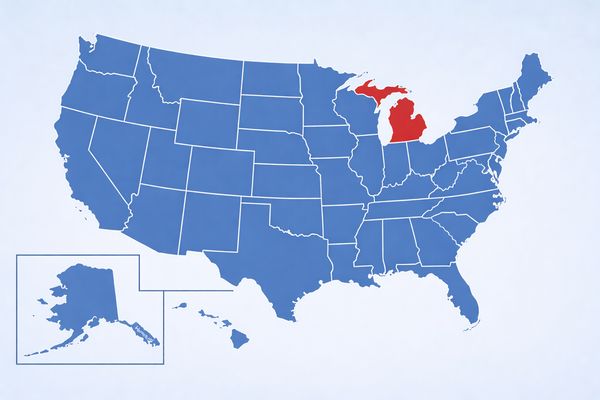
Michigan Overview
State Name: Michigan
Abbreviation: MI
Capital: Lansing
Largest City: Detroit
Statehood Date: January 26, 1837 (26th state)
Time Zone: Eastern Time (most of the state), Central Time (some western Upper Peninsula areas)
Nicknames: The Great Lakes State, The Wolverine State
Motto: Si quaeris peninsulam amoenam circumspice (If you seek a pleasant peninsula, look about you)
Location & Geography of Michigan
Michigan is located in the Great Lakes region of the United States and is the only state made up of two separate peninsulas: the Lower Peninsula and the Upper Peninsula (U.P.).
The state is bordered by four of the five Great Lakes: Lake Superior, Lake Michigan, Lake Huron, and Lake Erie, giving Michigan the longest freshwater coastline in the United States.
Michigan has diverse landscapes including sandy beaches, dunes, forests, lakes, rivers, and scenic shoreline towns. Northern Michigan and the U.P. are especially known for wilderness and outdoor beauty.
The climate is humid continental, with warm summers and cold winters. Lake-effect snow is common in many areas during winter.
Major Cities & Regions of Michigan
Detroit: The largest city, known for automotive history, music culture, and business redevelopment.
Grand Rapids: A major western city known for furniture manufacturing, art, and breweries.
Lansing: The capital city and an important government and education hub.
Ann Arbor: Known for the University of Michigan and a strong technology and research environment.
Traverse City: A popular travel destination known for lakes, wineries, and scenic beauty.
Economy & Key Industries in Michigan
Michigan’s economy is strongly connected to the automotive industry and is home to major vehicle manufacturing, engineering, and supply chain operations.
Other important industries include healthcare, technology, manufacturing, agriculture, tourism, and education.
Michigan is also known for agriculture products such as cherries, apples, blueberries, dairy, and corn, especially in rural and northern regions.
Tourism plays a major role due to the state’s lakes, beaches, outdoor recreation, and seasonal travel opportunities.
Government & Administration of Michigan
Michigan has an elected Governor and a bicameral legislature consisting of the Michigan House of Representatives and Michigan Senate.
The state is divided into 83 counties, each providing local services and administration.
Education in Michigan
Michigan is home to major universities such as the University of Michigan, Michigan State University, and Wayne State University.
The state has strong programs in engineering, medicine, business, and research, supporting innovation and workforce development.
Michigan also offers community colleges and technical training programs across major regions.
Transportation & Connectivity in Michigan
Major highways include I-75, I-94, and I-96, connecting key cities and manufacturing corridors.
Detroit Metropolitan Wayne County Airport (DTW) is the main airport and one of the busiest in the Midwest.
Michigan has important trade and shipping routes through Great Lakes ports and border crossings to Canada.
Public transportation is available in metro areas, and regional travel includes ferry routes to islands such as Mackinac Island.
Tourism & Attractions in Michigan
Mackinac Island: A famous island destination known for historic charm and car-free travel.
Sleeping Bear Dunes National Lakeshore: Known for dunes, beaches, and scenic Lake Michigan views.
Detroit Institute of Arts: One of the most respected art museums in the United States.
Henry Ford Museum: A major museum showcasing innovation, industry, and American history.
Upper Peninsula: Famous for waterfalls, forests, hiking, and wilderness adventure.
Best Time to Visit
The best time to visit Michigan is during summer (June to August) for beaches, lake activities, festivals, and island travel.
Fall (September to October) is also very popular for colorful autumn foliage, scenic drives, and cool weather.
Winter is ideal for snow sports like skiing and snowmobiling, especially in northern Michigan and the Upper Peninsula.
Culture & Lifestyle in Michigan
Michigan has a strong mix of urban culture and outdoor lifestyle, with many communities enjoying boating, fishing, hiking, and winter sports.
The state has rich music history, especially connected to Detroit’s Motown legacy.
Michigan sports culture is strong, with major teams and passionate fans across the state.
Food culture includes Great Lakes fish, local farm products, and famous regional treats like Detroit-style pizza.
History & Important Facts of Michigan
Michigan became the 26th state in 1837 and grew strongly through the shipping and manufacturing industries.
Detroit became the center of America’s auto industry and played a major role in shaping modern transportation.
The state also has deep Native American heritage and important historical development through trade and settlement.
Cost of Living & Living Conditions in Michigan
Michigan offers a moderate cost of living compared to many states, with affordable housing in many regions outside major metro areas.
Detroit and some fast-growing regions may have higher costs, while smaller towns remain very affordable.
Job opportunities are strong in manufacturing, healthcare, engineering, technology, and education.
Unique Highlights / Fun Facts about Michigan
1) Michigan has the longest freshwater coastline in the United States.
2) The state is surrounded by four Great Lakes and has thousands of inland lakes.
3) Detroit is known as the birthplace of America’s automotive industry.
4) Mackinac Island is famous for being car-free and known for its fudge shops.
5) Michigan is one of the top cherry-producing states in the United States.
Summary of Michigan
Michigan is a Great Lakes state known for its automotive history, stunning shoreline landscapes, and outdoor adventure opportunities. With major cities like Detroit and Grand Rapids and world-class destinations like Mackinac Island and Sleeping Bear Dunes, Michigan offers an excellent balance of industry, culture, and natural beauty.