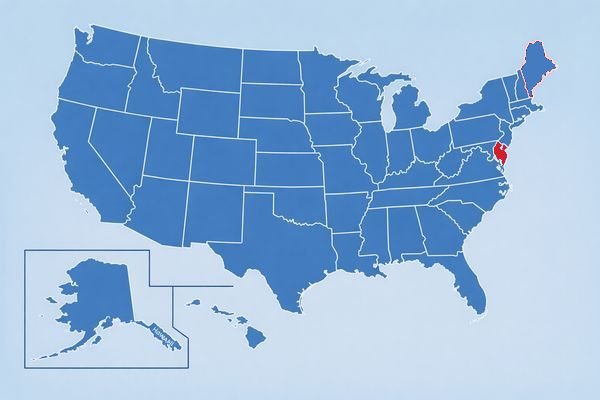
Maryland Overview
State Name: Maryland
Abbreviation: MD
Capital: Annapolis
Largest City: Baltimore
Statehood Date: April 28, 1788 (7th state)
Time Zone: Eastern Time
Nicknames: The Old Line State, The Free State
Motto: Fatti maschii, parole femine (Manly deeds, womanly words)
Location & Geography of Maryland
Maryland is located in the Mid-Atlantic region of the United States. It borders Pennsylvania to the north, Delaware to the east, Virginia and Washington, D.C. to the south and west, and West Virginia to the west.
The state has diverse geography including the Chesapeake Bay coastline, sandy beaches on the Atlantic coast, rolling hills, forests, and mountains in western Maryland.
Maryland has a humid subtropical climate in many areas, with hot summers, mild to cool winters, and pleasant spring and fall seasons.
Major Cities & Regions of Maryland
Baltimore: The largest city, known for historic harbor attractions, healthcare, and culture.
Annapolis: The capital city, famous for sailing, history, and the US Naval Academy.
Frederick: Known for historic charm, local businesses, and scenic countryside.
Rockville: A major suburban city near Washington, D.C., known for business and community growth.
Ocean City: A popular beach destination known for tourism and boardwalk culture.
Economy & Key Industries in Maryland
Maryland has a strong economy supported by government services, defense, biotechnology, healthcare, education, and shipping.
The state benefits greatly from its proximity to Washington, D.C., with many residents working in federal agencies and related sectors.
Maryland has a growing biotech and research sector, supported by major institutions and medical centers.
Tourism is important, especially for Chesapeake Bay travel, historic towns, and beach vacations in Ocean City.
Government & Administration of Maryland
Maryland has an elected Governor and a bicameral legislature consisting of the Maryland House of Delegates and Maryland Senate.
The state is divided into 23 counties and 1 independent city (Baltimore City).
Education in Maryland
Maryland has strong universities such as the University of Maryland, Johns Hopkins University, and the US Naval Academy.
The state is known for high-quality education and research programs, especially in science, medicine, and engineering.
Maryland also has strong public school systems in many counties, especially in suburban areas.
Transportation & Connectivity in Maryland
Maryland has excellent transportation links with major highways such as I-95 connecting the state to major East Coast cities.
Major airports include Baltimore/Washington International Thurgood Marshall Airport (BWI), which serves as a key regional hub.
Maryland also offers strong rail access through Amtrak and commuter rail systems connecting to Washington, D.C.
The Port of Baltimore is one of the most important ports in the United States for shipping and trade.
Tourism & Attractions in Maryland
Inner Harbor (Baltimore): A major waterfront destination with museums, shops, and entertainment.
Chesapeake Bay: Famous for sailing, seafood, and scenic coastal experiences.
Ocean City: A popular Atlantic beach destination with boardwalk attractions.
Antietam National Battlefield: A historic Civil War site and major tourism location.
National Aquarium (Baltimore): One of the top aquariums in the United States.
Best Time to Visit
The best time to visit Maryland is during spring (April to June) and fall (September to October) when the weather is pleasant for sightseeing and outdoor activities.
Summer is the best season for Chesapeake Bay travel and beach tourism in Ocean City, but it can be hot and crowded.
Winter is cooler and quieter, offering good opportunities for museums, holiday events, and indoor travel experiences.
Culture & Lifestyle in Maryland
Maryland has a unique culture shaped by coastal traditions, historic towns, and modern suburban communities near Washington, D.C.
The state is famous for seafood, especially Maryland blue crabs and crab cakes.
Maryland offers a mix of city life, waterfront lifestyle, and family-friendly suburbs with strong community culture.
History & Important Facts of Maryland
Maryland was one of the original 13 colonies and became the 7th state in the United States in 1788.
The state played an important role in early American politics, maritime trade, and Civil War history.
Maryland is also closely connected to US national history through its location near the capital and important battle sites.
Cost of Living & Living Conditions in Maryland
Maryland has a moderate to high cost of living, especially in areas near Washington, D.C., such as Montgomery County and Prince George’s County.
Housing is more affordable in western Maryland and smaller towns compared to high-demand suburban regions.
Job opportunities are strong in government, defense, healthcare, biotechnology, education, and shipping industries.
Unique Highlights / Fun Facts about Maryland
1) Maryland is famous for blue crabs and crab cakes, especially around the Chesapeake Bay.
2) Annapolis is known as America’s sailing capital and home to the US Naval Academy.
3) The state has both Atlantic Ocean beaches and Chesapeake Bay coastlines.
4) Baltimore’s Inner Harbor is one of the most famous waterfront tourist areas in the US.
5) Maryland has strong biotech and research industries, supported by major institutions.
Summary of Maryland
Maryland is a diverse Mid-Atlantic state known for its Chesapeake Bay lifestyle, seafood culture, historic importance, and strong economy near Washington, D.C. With attractions like Baltimore’s Inner Harbor, Ocean City beaches, and rich American history, Maryland offers a great mix of tourism, opportunity, and coastal charm.