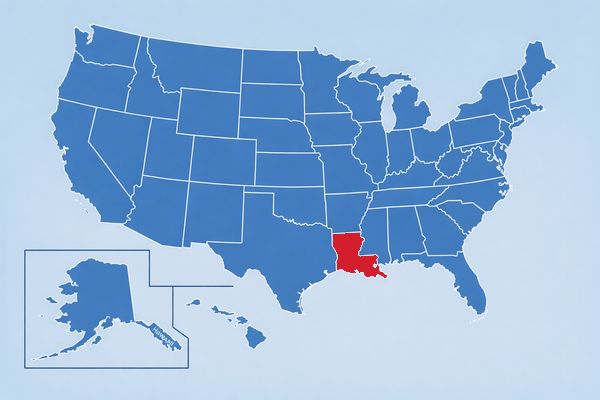
Louisiana Overview
State Name: Louisiana
Abbreviation: LA
Capital: Baton Rouge
Largest City: New Orleans
Statehood Date: April 30, 1812 (18th state)
Time Zone: Central Time
Nicknames: The Pelican State
Motto: Union, Justice, Confidence
Location & Geography of Louisiana
Louisiana is located in the Southern United States along the Gulf of Mexico. It borders Texas to the west, Arkansas to the north, Mississippi to the east, and has a long coastline along the Gulf.
The state is known for its wetlands, bayous, rivers, swamps, and low-lying coastal plains. The Mississippi River is one of the most important geographic and economic features of Louisiana.
Louisiana has a humid subtropical climate with hot, humid summers and mild winters. The state also experiences hurricanes and tropical storms, especially along coastal areas.
Major Cities & Regions of Louisiana
New Orleans: The largest city and a world-famous cultural hub known for music, history, and festivals.
Baton Rouge: The capital city, known for government, education, and industry.
Shreveport: A major northern city known for business, entertainment, and regional trade.
Lafayette: Known for Cajun culture, food, and music traditions.
Lake Charles: Known for energy industries, casinos, and coastal tourism.
Economy & Key Industries in Louisiana
Louisiana’s economy is supported by oil and gas, petrochemicals, shipping, tourism, seafood, agriculture, and manufacturing.
The state has major ports and waterways, especially along the Mississippi River, making it a key transportation and trade center.
Tourism is a major industry due to New Orleans, Mardi Gras celebrations, music culture, and unique Cajun and Creole traditions.
Seafood industries are important, including shrimp, crawfish, and oysters, which are central to the state’s food culture.
Government & Administration of Louisiana
Louisiana has an elected Governor and a bicameral legislature consisting of the Louisiana House of Representatives and Louisiana Senate.
The state is divided into 64 parishes (instead of counties), which is unique among US states.
Education in Louisiana
Louisiana has major universities such as Louisiana State University (LSU), Tulane University, and the University of Louisiana at Lafayette.
The state’s education system includes public schools, private schools, and strong programs in engineering, healthcare, and business.
Transportation & Connectivity in Louisiana
Major highways include I-10, I-20, and I-55, which connect Louisiana to Texas, Mississippi, and other states.
Major airports include Louis Armstrong New Orleans International Airport and Baton Rouge Metropolitan Airport.
Louisiana is home to some of the most important ports in the United States, especially the Port of New Orleans and river ports along the Mississippi.
Tourism & Attractions in Louisiana
French Quarter (New Orleans): Famous for historic streets, music, nightlife, and Creole culture.
Mardi Gras: One of the biggest festivals in the world, celebrated mainly in New Orleans.
Louisiana Bayous: Known for swamp tours, wildlife, and unique ecosystems.
National WWII Museum (New Orleans): A major historical museum attraction.
Plantation Homes: Historic sites showcasing Louisiana’s cultural and architectural history.
Best Time to Visit
The best time to visit Louisiana is during late fall (October to November) and early spring (February to April) when the weather is comfortable and festival season is active.
February and March are especially popular because of Mardi Gras celebrations and lively cultural events.
Summer is hot and humid and also overlaps with hurricane season, so many travelers prefer visiting outside peak summer months.
Culture & Lifestyle in Louisiana
Louisiana has one of the most unique cultures in the United States, influenced by French, African, Spanish, and Native American traditions.
The state is famous for Cajun and Creole food, including gumbo, jambalaya, crawfish boils, and beignets.
Music is central to Louisiana life, especially jazz, blues, zydeco, and brass band traditions.
Festivals are common across the state, with strong community celebrations throughout the year.
History & Important Facts of Louisiana
Louisiana became the 18th state in 1812 and has a long history shaped by French and Spanish colonial influence.
The Louisiana Purchase in 1803 was one of the most important events in US history, doubling the size of the country.
New Orleans has been one of America’s most culturally influential cities for centuries.
Cost of Living & Living Conditions in Louisiana
Louisiana generally has a moderate cost of living, with affordable housing in many areas compared to national averages.
New Orleans and Baton Rouge may have higher costs than smaller cities, especially in popular neighborhoods.
Job opportunities are strong in energy, shipping, manufacturing, healthcare, and tourism-related industries.
Unique Highlights / Fun Facts about Louisiana
1) Louisiana is the only US state divided into parishes instead of counties.
2) New Orleans is considered one of the birthplaces of jazz music.
3) Louisiana has a strong seafood culture, famous for crawfish, shrimp, and oysters.
4) Mardi Gras is one of the world’s biggest and most famous festivals.
5) The Mississippi River plays a major role in Louisiana’s economy, culture, and transportation.
Summary of Louisiana
Louisiana is a culturally rich southern state known for New Orleans, jazz music, Cajun and Creole cuisine, and unique bayou landscapes. With strong industries in energy and shipping and world-famous festivals like Mardi Gras, Louisiana offers an unforgettable mix of history, lifestyle, and tourism.