
Table of Contents
About Las Vegas
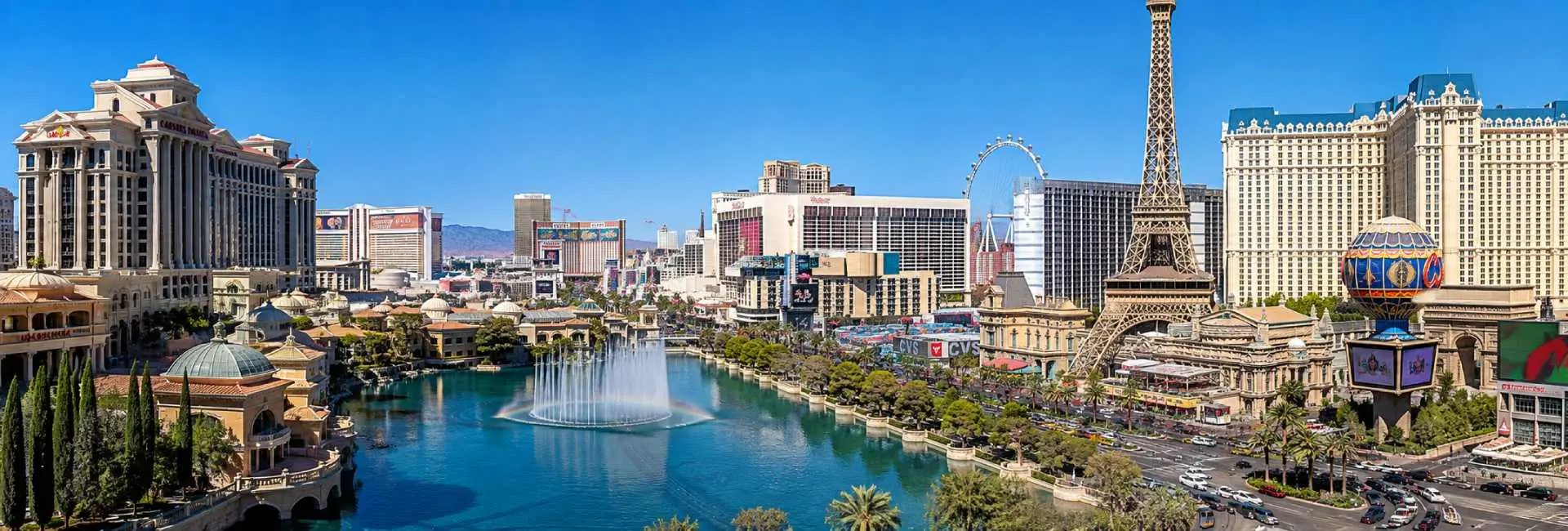
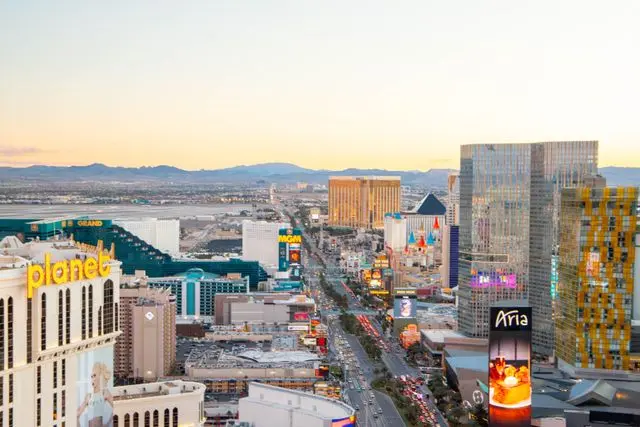
Las Vegas rose out of the Mojave Desert as a rail stop before transforming, over the course of the 20th century, into the world's most recognizable gambling and entertainment city. Its identity is built around the Strip — a 4-mile stretch of Las Vegas Boulevard lined with themed mega-resorts — but the city itself extends far beyond it, into a metro area of nearly 2.3 million people who live, work, and raise families in its shadow.
What draws most visitors is the sheer concentration of spectacle in one place: casino floors open 24 hours, headline residencies from major musicians, Michelin-starred restaurants inside hotel towers, and elaborate free attractions like fountain shows and volcano displays. But Las Vegas is also a genuine gateway to the desert Southwest, with the Grand Canyon, Red Rock Canyon, and Hoover Dam all within striking distance, giving visitors an easy way to pair the city's intensity with a day of open desert and canyon scenery.
Climate & Best Time to Visit
Weather Overview
Las Vegas has a hot desert climate with very low humidity year-round. Summers are extreme, with daytime highs regularly exceeding 100°F (38°C) from June through September and occasional spikes past 110°F (43°C) in July and August. Winters are mild by comparison, with daytime highs in the mid-50s to low 60s°F (roughly 12–17°C) and cool nights that can approach freezing.
Best Months to Visit
- March–May: Warm, sunny days and cool evenings — one of the most comfortable windows for walking the Strip and visiting nearby desert parks.
- June–August: Extreme heat that makes daytime outdoor activity uncomfortable or risky; indoor casino life and pool culture take over, and hotel rates can dip due to the heat.
- September–November: Temperatures ease back into a comfortable range, making this another strong window for outdoor day trips.
- December–February: Mild days and cold nights, with New Year's Eve on the Strip among the busiest and most expensive nights of the year.
What to Pack
Layers matter more than most visitors expect: casino interiors are heavily air-conditioned even in summer, and desert evenings cool off quickly regardless of season. Sun protection is essential nearly year-round given the dry, high-UV climate.
Getting to Las Vegas
Harry Reid International Airport (LAS)
Harry Reid International Airport sits just a couple of miles east of the southern end of the Strip, making it one of the most centrally located major airports of any U.S. tourist destination. It handles extensive domestic service and a growing number of international routes.
Driving
Las Vegas is a common road-trip stop from Los Angeles (roughly a 4–5 hour drive via I-15), Phoenix, and Salt Lake City. Interstate 15 running through the city can see heavy holiday-weekend congestion, particularly on the stretch toward Southern California.
Amtrak and Buses
Las Vegas has no direct Amtrak passenger rail service; long-distance travel by rail typically involves a connecting bus (Thruway) service to a nearby station. Regional and long-distance bus lines connect Las Vegas to Los Angeles, Phoenix, and other Southwestern cities.
Transportation in Las Vegas
Walking the Strip
Much of the Strip is designed to be walked, with elevated pedestrian bridges connecting major resorts across busy intersections. Distances between resorts are often longer than they appear on a map — walking from one end of the Strip to the other can take well over an hour.
Las Vegas Monorail
The Las Vegas Monorail runs along the east side of the Strip, connecting several major resorts and the Las Vegas Convention Center, useful for skipping Strip-front foot traffic and avoiding a rental car for short hops.
The Deuce and RTC Buses
The Deuce is a double-decker bus running the length of the Strip and into Downtown, operated by the Regional Transportation Commission (RTC); it's inexpensive and runs frequently but can be slow in heavy traffic. RTC's broader bus network covers the wider valley for visitors venturing beyond the Strip and Downtown.
Rideshare and Taxis
Uber, Lyft, and taxis are widely available and often the most practical way to move between the Strip, Downtown, and off-Strip neighborhoods, especially late at night. Note that airport pickup for rideshare and taxis is routed through designated zones rather than curbside.
Rental Car
A rental car isn't necessary for a Strip-focused trip but becomes useful for day trips to Red Rock Canyon, Hoover Dam, or the Grand Canyon, since none of those are practically reachable by public transit.
Things to Do in Las Vegas
The Strip's Signature Resorts
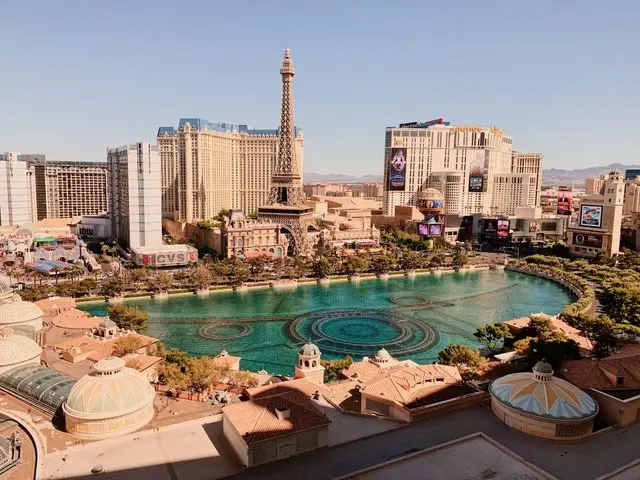
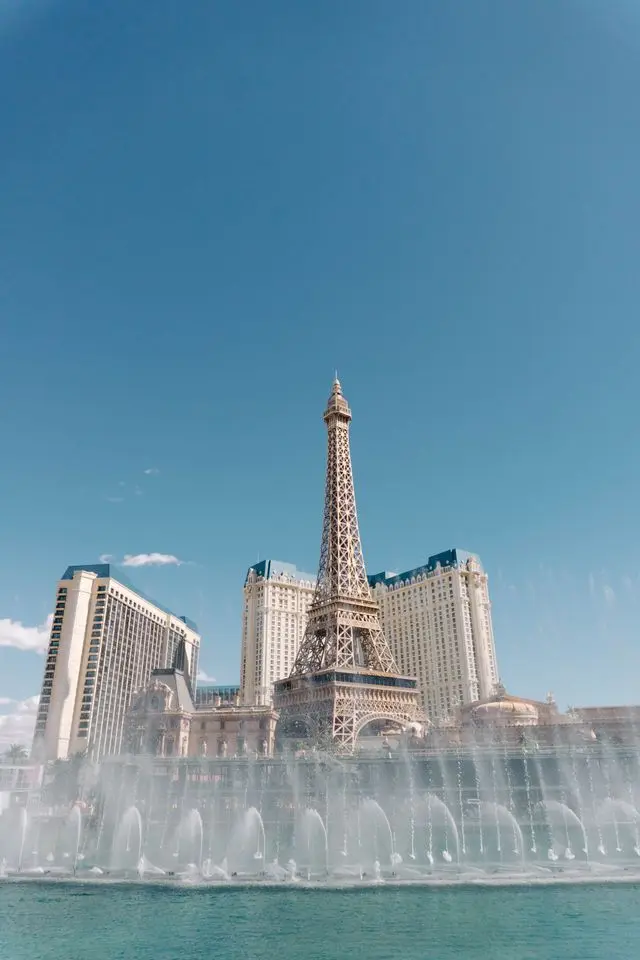
Each major Strip resort functions as its own attraction: the Bellagio's choreographed fountain show, the Venetian's indoor gondola canals, and Caesars Palace's Roman-themed shopping promenade are all free to walk through even without gambling or staying on-property.
Shows and Residencies
Las Vegas is one of the world's biggest live-entertainment markets, from long-running Cirque du Soleil productions to headline residencies by major recording artists at purpose-built arenas and theaters. Tickets for the biggest residencies sell out well in advance.
Fremont Street Experience
Downtown's Fremont Street Experience is a pedestrian corridor under a massive LED canopy, with free nightly light shows, street performers, and a noticeably older-school, lower-stakes casino atmosphere than the Strip.
Observation and Thrill Attractions
The High Roller observation wheel at The LINQ offers valley-wide views, while attractions like the SkyPod at the STRAT and various rooftop rides give visitors a higher-adrenaline look at the skyline.
Beyond the Casino Floor
The Neon Museum preserves and displays retired Las Vegas signage in an outdoor "boneyard," and the Mob Museum in a former federal courthouse Downtown covers the city's organized-crime history in detail.
Neighborhoods to Explore
- The Strip: The main resort corridor along Las Vegas Boulevard, home to the largest casinos, shows, and shopping — the default base for most first-time visitors.
- Downtown / Fremont Street: The city's original gambling district, several miles north of the Strip, with a grittier, more local feel, lower table minimums, and the Fremont Street Experience canopy.
- Arts District (18b): A small, walkable pocket just southwest of Downtown known for independent galleries, vintage shops, and a growing restaurant and coffee scene.
- Chinatown (Spring Mountain Road): A dense strip of Chinese, Vietnamese, Korean, and other Asian restaurants and shopping plazas just west of the Strip, popular with locals and increasingly with visitors.
- Summerlin: A master-planned residential community on the western edge of the valley, closest to Red Rock Canyon, with upscale shopping and dining away from the tourist core.
- Henderson: A suburban city southeast of Las Vegas with a more residential, family-oriented feel, and the closest large community to Lake Mead and Hoover Dam.
Food in Las Vegas
Celebrity and Fine Dining
Las Vegas hosts an unusually high concentration of restaurants from internationally known chefs, many housed inside Strip resorts, ranging from tasting-menu fine dining to more casual chef-driven concepts.
Buffets
The Las Vegas buffet remains a signature experience at several major resorts, offering a wide spread of cuisines in one sitting, though prices at the best-regarded buffets have risen well beyond their old reputation as a bargain.
Chinatown and Off-Strip Local Food
Spring Mountain Road's Chinatown district is widely regarded by locals as the city's strongest concentration of quality, reasonably priced food, spanning Chinese, Vietnamese, Korean, and Japanese kitchens well outside the resort-dining price bracket.
24-Hour Dining
True to the city's round-the-clock culture, many casino coffee shops and diners serve full menus at any hour, a holdover from Vegas's classic gambling-town identity.

Accommodation in Las Vegas
The Strip
Staying on the Strip puts visitors within walking distance of the biggest resorts, shows, and nightlife, though it comes with the highest room rates, resort fees, and parking charges, along with the most foot traffic and noise.
Downtown
Downtown hotels tend to be less expensive than Strip properties and put visitors close to Fremont Street's free nightly shows, with a more local, old-Vegas atmosphere, though further from the Strip's biggest attractions.
Off-Strip and Summerlin
Off-Strip resorts and hotels in areas like Summerlin generally offer lower rates and less crowding, appealing to visitors prioritizing value or planning to rent a car for desert day trips, at the cost of a longer commute to the Strip.
Resort Fees
Almost all Las Vegas hotels charge a mandatory nightly resort fee on top of the room rate, covering amenities like Wi-Fi and pool access — factor this into any price comparison between properties, since it's rarely included in the advertised rate.
Day Trips from Las Vegas
- Red Rock Canyon National Conservation Area: About 20–30 minutes west of the Strip, with a scenic 13-mile loop drive, hiking trails, and dramatic red sandstone formations — the easiest desert escape from the city.
- Hoover Dam: Roughly 45 minutes southeast on the Nevada–Arizona border, offering guided tours of the dam's interior and views over Lake Mead.
- Lake Mead National Recreation Area: Adjacent to Hoover Dam, popular for boating, kayaking, and swimming in the reservoir formed by the Colorado River.
- Valley of Fire State Park: About an hour northeast, known for vivid red rock formations and ancient petroglyphs, with less crowding than Red Rock Canyon.
- Grand Canyon West: About 2.5–3 hours southeast, home to the glass-floored Skywalk and Hualapai-operated tours; the more famous South Rim is a considerably longer drive.
Safety Tips in Las Vegas
General Safety
The Strip and Downtown's main tourist corridors are heavily patrolled and generally safe, though pickpocketing and scams targeting distracted tourists occur in crowded areas — keep valuables secure in casinos and busy pedestrian zones.
Gambling and Alcohol
Free drinks are common on casino floors while actively gambling, and it's easy to lose track of both spending and alcohol intake in a windowless, clock-free environment — set a budget and pace before starting to play.
Street Promoters and Scams
Street performers, ticket promoters, and people handing out flyers on the Strip are a constant presence and not always straightforward about pricing or legitimacy; it's fine to simply decline and keep walking.
Heat Safety
Summer heat is a genuine hazard, especially for anyone planning a day trip to Red Rock Canyon, Valley of Fire, or Hoover Dam — carry more water than seems necessary and avoid extended midday hiking in June through August.
Emergency Numbers
Dial 911 for police, fire, or medical emergencies anywhere in the U.S., including Las Vegas.
Budget & Costs in Las Vegas
Accommodation and Resort Fees
Room rates swing dramatically by day of week, convention schedule, and season — weekday and off-peak rates can be a fraction of weekend and major-event pricing. Remember to add the mandatory nightly resort fee, which isn't included in most quoted rates.
Gambling Budget
Set a fixed gambling budget before arriving and treat it as entertainment spending rather than an investment; minimum bets vary widely between Downtown (generally lower) and the Strip (generally higher), especially at peak hours.
Shows and Attractions
Headline shows and residencies range from moderate to very expensive depending on the performer and seating, while several of the city's best-known attractions — the Bellagio fountains, Fremont Street's canopy shows, and walking through themed resort lobbies — are free.
Saving Money
- Visit midweek rather than Friday–Sunday for lower room rates and thinner crowds.
- Eat in Chinatown or Downtown instead of Strip resort restaurants for most meals.
- Book show tickets in advance or check day-of discount ticket booths for lower prices.
- Factor resort fees and parking charges into any hotel price comparison before booking.
Suggested Itineraries
Weekend: Strip Highlights
Day one exploring the Strip on foot — Bellagio fountains, the Venetian's canals, and a stroll through several resort casinos — followed by a show in the evening; day two for a spa morning, shopping, and a headline dinner before a second night out.
3 Days: Strip Plus Desert
Spend the first two days on Strip attractions, dining, and shows, then dedicate day three to Red Rock Canyon's scenic loop drive and a stop in Chinatown for dinner on the way back.
4–5 Days: Full Regional Trip
Add Hoover Dam and Lake Mead as a half-day trip, and consider a full-day excursion to Valley of Fire State Park or Grand Canyon West to round out a longer stay beyond the resort corridor.
Frequently Asked Questions about Las Vegas
How many days do you need in Las Vegas? +
Two to three days covers the Strip's main attractions and a show, while four to five days allows time to add Downtown's Fremont Street and at least one desert day trip like Red Rock Canyon or Hoover Dam.
What is the best time of year to visit Las Vegas? +
Spring (March–May) and fall (September–November) offer the most comfortable weather for walking the Strip and taking desert day trips, while summer brings extreme heat and winter nights can be cold.
Is Las Vegas expensive? +
It depends heavily on choices: room rates, resort fees, and Strip dining can add up quickly, but midweek travel, Downtown or off-Strip lodging, and eating in Chinatown can bring costs down significantly.
Is Las Vegas safe for tourists? +
Yes, the main tourist areas are well-patrolled, though visitors should stay alert for pickpocketing in crowds and be cautious with street promoters and unsolicited offers on the Strip.
Do you need a car in Las Vegas? +
Not for a Strip- and Downtown-focused trip, since walking, the monorail, the Deuce bus, and rideshare cover most needs, but a car (or booked tour) is the practical way to reach Red Rock Canyon, Hoover Dam, or the Grand Canyon.
What are resort fees and why do they matter? +
Resort fees are mandatory nightly charges added on top of the room rate at nearly every Las Vegas hotel, covering amenities like Wi-Fi and pool access; always add this to the quoted rate when comparing hotel prices.
Is Las Vegas good for a trip without gambling? +
Yes — shows, fine dining, the Neon Museum, the Mob Museum, and nearby natural attractions like Red Rock Canyon and Hoover Dam give visitors plenty to do without setting foot on a casino floor.
What's the best area to stay in for first-time visitors? +
The Strip is the most convenient choice for first-timers focused on major resorts and shows, while Downtown suits visitors who want a more local, lower-cost, old-Vegas atmosphere.
Can you day-trip to the Grand Canyon from Las Vegas? +
Yes — Grand Canyon West, with its Skywalk, is roughly 2.5–3 hours away and doable as a long day trip, while the more famous South Rim requires a considerably longer drive or a flight.
What do first-time visitors often not realize about Las Vegas? +
That the Strip is much longer to walk than it looks — distances between resorts are often a half-mile or more — and that the surrounding desert, from Red Rock Canyon to Hoover Dam, is close enough to easily pair with a Strip-focused trip.