
Table of Contents
- Introduction: Why the USA Is Worth the Planning
- Before You Go: Entry Requirements and Trip Planning Basics
- Getting Around the USA
- Budgeting for Your Trip
- Sample Itineraries for First-Time Visitors
- Practical Travel Tips
- Common Mistakes First-Time USA Travelers Make
- Conclusion: Putting It All Together
Introduction: Why the USA Is Worth the Planning
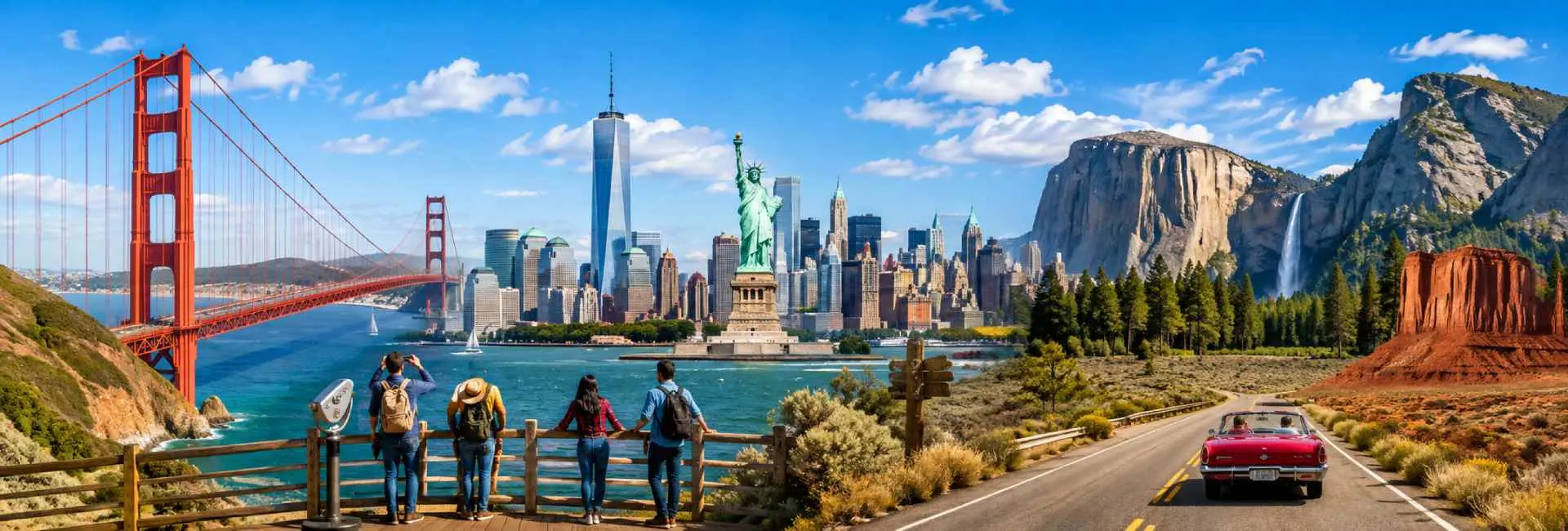
The United States packs an unusual amount of variety into one country: glass-and-steel cities, red-rock deserts, alpine national parks, and beach towns are all reachable within a single trip if you plan the logistics well. That variety is also what makes first-time planning feel overwhelming — distances are large, transportation options vary wildly by region, and the "right" itinerary depends heavily on which version of the country you actually want to see.
This guide breaks the process into manageable pieces: what to sort out before you fly, how to move around once you land, what things realistically cost, and a few sample itineraries you can adapt rather than build from scratch. It's written for first-time and infrequent visitors, though seasoned travelers may still find the budgeting and itinerary sections useful for planning a new region.

Before You Go: Entry Requirements and Trip Planning Basics
Visa and Entry Requirements
Citizens of the 42 countries in the Visa Waiver Program can enter the US for tourism or business stays of 90 days or less using an ESTA (Electronic System for Travel Authorization) instead of a full visa. As of 2026, the ESTA application costs $40.27 per traveler, is usually approved within minutes but can take up to 72 hours, and remains valid for two years or until your passport expires, whichever comes first. Travelers from countries outside the Visa Waiver Program need a traditional B-1/B-2 visitor visa, which involves a consulate interview and a longer lead time, so it's worth starting that process several months ahead.
Always apply through the official CBP ESTA portal directly rather than a third-party site, since unofficial sites often charge inflated service fees for the same application. Because entry rules and fees are adjusted periodically, confirm the current requirements and cost for your nationality against the official CBP or State Department site shortly before booking.
Choosing When to Go
Peak season (June through August) brings the best weather to most of the country but also the highest prices and the biggest crowds at national parks and major cities. Shoulder seasons — April to May and September to October — tend to offer a better balance of good weather, thinner crowds, and lower hotel rates, especially in the national parks and along the coasts. Winter is a strong choice if your trip centers on cities, skiing, or the warmer southern states, but many mountain roads and park facilities scale back or close entirely.
Travel Insurance and Health Coverage
US healthcare is not free at the point of use, and a single emergency room visit can run into the thousands of dollars without coverage. Travel insurance that specifically covers medical treatment in the US is worth budgeting for, and it's worth checking that your policy covers activities you're planning, such as hiking, skiing, or driving a rental car.
Getting Around the USA
Domestic Flights
For a trip spanning more than one region — say, both coasts, or the Northeast and Florida — domestic flights are usually faster and often cheaper than driving or taking a train. Budget carriers like Southwest, Spirit, and Frontier can bring prices down significantly, though they typically charge extra for checked bags and seat selection, so compare the full price rather than just the base fare.
Renting a Car
Outside of a handful of dense cities, a car is the most practical way to see the USA, especially for national parks, small towns, and coastal drives that public transit doesn't reach. Most major rental companies require drivers to be at least 21 (often with a young-driver surcharge under 25) and a valid driver's license from your home country, sometimes paired with an International Driving Permit depending on the state. Book rentals early during peak season, since national park gateway towns can sell out of cars weeks in advance.
Trains and Buses
Amtrak connects many major cities but runs far less frequently and at lower speeds than European or Japanese rail, so it works best for scenic point-to-point routes (like the California Zephyr through the Rockies) rather than as a primary way to cover ground quickly. Long-distance buses, particularly Greyhound and FlixBus, are the cheapest way to travel between cities and a reasonable option if you're not in a hurry and don't need a car.
Getting Around Within Cities
Public transit quality varies enormously by city — New York, Chicago, Washington D.C., and San Francisco have solid systems, while cities like Los Angeles and most of the Sun Belt are built around driving. Rideshare apps such as Uber and Lyft are widely available and often the most convenient option for short hops, especially late at night or with luggage.

Budgeting for Your Trip
Costs vary enormously by region and travel style, but a few line items make up the bulk of any USA trip budget. Building a rough daily estimate before you go makes it much easier to compare cities and adjust your itinerary if the numbers don't fit.
- Accommodation — Budget hotels or hostels typically run $80–150 per night in mid-size cities and can exceed $250–300 in New York, San Francisco, or during peak season anywhere
- Food — Expect roughly $15–25 per person for a casual sit-down meal, $8–15 for fast-casual food, and considerably more in major cities; groceries and self-catering can cut this significantly
- Local transport — City transit passes generally cost $5–15 per day, while rideshare trips within a city commonly run $10–30 depending on distance
- Rental cars — Often $40–90 per day before taxes and insurance, plus fuel, which varies significantly by state
- Activities and entrance fees — National park entry is typically $20–35 per vehicle for a week's access, while major city attractions and museums often run $20–40 per person
- Tipping — Factor in 18–20% at sit-down restaurants and $1–2 per drink at bars, since tipping is expected rather than optional in most service settings
Since prices shift with inflation, season, and location, treat these as a starting planning range rather than fixed numbers, and check current rates for your specific cities before finalizing a budget.
Sample Itineraries for First-Time Visitors
East Coast Classic (7 Days)
A compact loop covering New York City, Washington D.C., and Philadelphia, connected by train rather than a rental car. Spend three days in New York covering Manhattan's major sights, a day or two in Philadelphia for its Revolutionary War history, and the remainder in Washington D.C. for its free Smithsonian museums and monuments. This route works well without a car, since Amtrak's Northeast Corridor connects all three cities directly.
West Coast Highlights (10 Days)
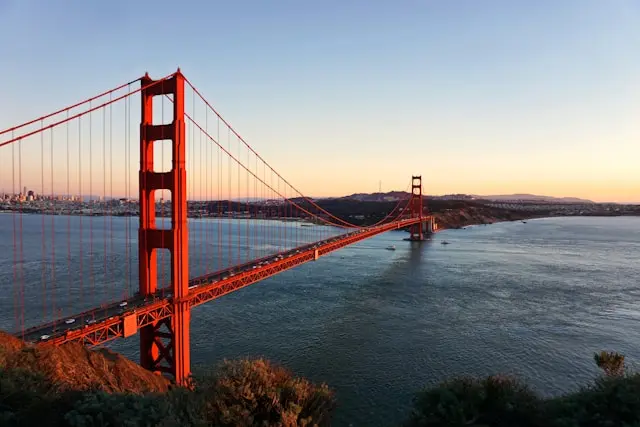
A road trip from San Francisco to Los Angeles along the Pacific Coast Highway, with a detour inland to Yosemite National Park. Start with two to three days in San Francisco, drive the coastal route through Big Sur and Santa Barbara over several days, spend a day in Yosemite if timing allows, and finish with three to four days in Los Angeles and San Diego. A rental car is essential for this route.
National Parks Loop (14 Days)
A driving route through the Southwest's national parks, typically starting and ending in Las Vegas: Zion, Bryce Canyon, the Grand Canyon's South Rim, and either Arches or Monument Valley, depending on time. This trip rewards a slower pace, since driving distances between parks can run four to six hours, and it's best done in spring or fall to avoid summer desert heat.
Practical Travel Tips
- Distances between cities are often much larger than they look on a map — check drive times, not just mileage, before building a day-by-day plan
- Sales tax is added at checkout rather than shown on price tags, and the rate varies by state and city, so the final price is usually higher than the sticker price
- Tipping is expected in restaurants, taxis, and for hotel staff; many card machines now prompt a tip percentage even for counter service
- Time zones span six hours coast to coast, which matters for booking domestic flights or scheduling calls back home
- Carry a physical or digital copy of your passport and entry documents separately from the originals in case of loss
- National park entrance passes (such as the annual "America the Beautiful" pass) can be cheaper than paying individual entry fees if visiting more than two or three parks
Common Mistakes First-Time USA Travelers Make
- Underestimating driving distances and packing too many destinations into too few days
- Booking national park lodges or campsites too late — popular parks can sell out six months or more in advance for peak season
- Assuming public transit will be available outside major cities, when a car is often required
- Not budgeting for tipping and sales tax, which can add 25–30% on top of listed menu or ticket prices
- Skipping travel insurance with US medical coverage, given how expensive out-of-pocket healthcare can be
- Applying for an ESTA or visa too close to the travel date, leaving no buffer if extra verification is needed

Conclusion: Putting It All Together
A smooth USA trip usually comes down to matching your itinerary to your transportation choice rather than the other way around — decide early whether you're flying between a few cities, driving a regional loop, or doing some mix of both, and let that decision shape everything else. Sort out entry requirements and major bookings first, build in more travel time between stops than feels necessary, and leave room in the budget for the extra costs — tax, tips, and fees — that don't show up on the price tag.
Whichever region you choose, the country rewards travelers who plan the logistics loosely enough to have a good time and tightly enough not to waste a day of a short trip figuring out how to get to the next place.
Frequently Asked Questions
Do I need a visa to visit the USA? +
It depends on your nationality. Citizens of the 42 Visa Waiver Program countries can travel on an ESTA instead of a visa for stays of 90 days or less; travelers from other countries need a traditional B-1/B-2 visitor visa, which requires a consulate interview and more lead time.
How much does an ESTA cost? +
As of 2026, the ESTA application fee is $40.27 per traveler, and approval is usually granted within minutes, though it can take up to 72 hours, so it's best to apply well ahead of your trip.
Do I need a car to travel around the USA? +
Outside of a handful of transit-friendly cities like New York, Washington D.C., and San Francisco, a car is generally necessary, especially for national parks, small towns, and coastal drives that trains and buses don't reach.
What's the best time of year to visit? +
Shoulder seasons — spring and fall — usually offer the best mix of good weather, smaller crowds, and lower prices, while summer brings peak crowds and prices and winter is better suited to city trips or skiing than national park visits.
How much should I budget per day? +
A reasonable starting range for a mid-range trip is $150–250 per person per day covering accommodation, food, local transport, and activities, though this varies significantly by city and travel style.
Is tipping really necessary in the USA? +
Yes — tipping is expected rather than optional in most US service settings, typically 18–20% at sit-down restaurants, and skipping it is generally considered rude rather than simply frugal.
How far in advance should I book national park lodging? +
As early as possible for peak season — lodges and campsites inside popular parks like Yosemite, Zion, and the Grand Canyon commonly sell out six months or more ahead of summer travel dates.
Can I see both coasts in one trip? +
It's possible but works best as two separate legs connected by a domestic flight rather than one continuous drive, since the coast-to-coast distance is roughly 2,800 miles and would consume most of a short trip if driven.